




Weird D&D Monster Lore Deep Dive: Illithids or Mind Flayers
Mind Flayers Are a Species That Reproduces by Replacing You

Mind flayers do not give birth.
They convert.
At a glance, illithids appear as humanoids with squid-like heads, powerful psionic abilities, and a taste for brains.
Official lore reveals something far worse:
Every mind flayer was once a different person.
The Official Weird Lore (Yes, This Is Canon)
Across multiple editions, including Monster Manual, Volo’s Guide to Monsters, and Mordenkainen’s Tome of Foes, mind flayer reproduction is described as:
-
Mind flayers implant tadpoles into humanoid hosts
-
Tadpole migrates to the brain
-
Tadpole consumes the host brain
-
Tadpole reshapes the body
-
Host personality is destroyed
-
A new mind flayer emerges
This process is called ceremorphosis.
Source:
Monster Manual (5e), Mind Flayer
Volo’s Guide to Monsters
Mordenkainen’s Tome of Foes
No eggs.
No children.
Only conversion.
There Are No “Illithid Infants”
Newly created mind flayers:
-
Awaken with adult intelligence
-
Possess racial memories
-
Immediately join the colony
Which implies:
They do not grow up.
They turn on.
🧠 Mind flayers are manufactured.
A Species Built on Extinction

Every mind flayer equals:
One dead person.
Their population growth requires:
-
Raids
-
Slavery
-
Breeding stock
-
Farms
They cannot exist peacefully alongside humanoids.
Their survival necessitates genocide.
Not war.
Not conquest.
Consumption.
The Hive Mind Problem
Mind flayers live under elder brains:
-
Massive conglomerations of brains
-
Psychic nodes controlling colonies
-
Store racial memory and experience
Individual illithids are semi-independent extensions of a larger intellect.
Which means:
When you fight one mind flayer…
You are encountering the distributed nervous system of a super-organism.
How GMs Can Use This Lore
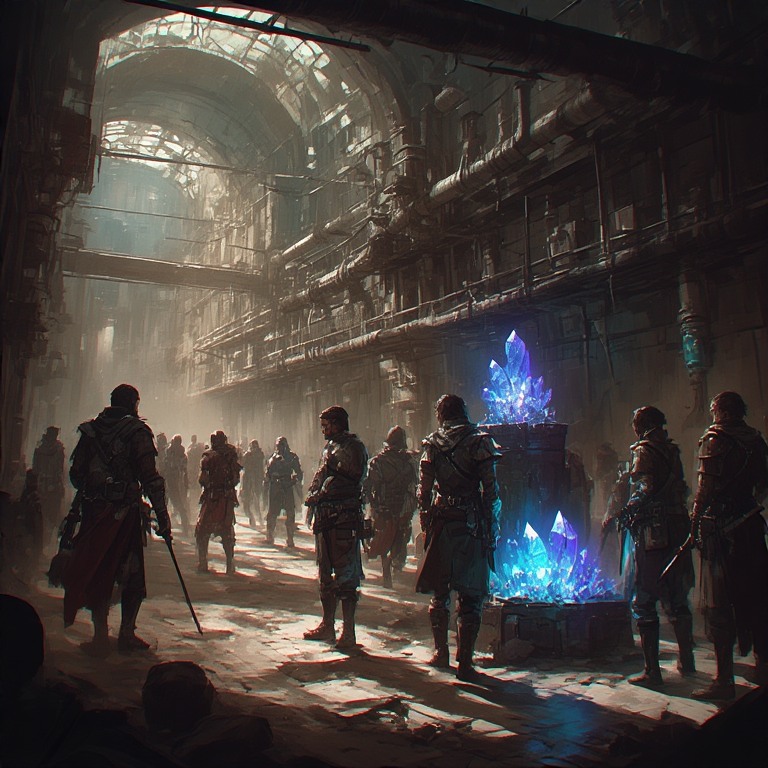
1. Make Colonies Feel Industrial
Show:
-
Host pens
-
Breeding chambers
-
Ceremorphosis pools
-
Discarded skull piles
-
Silent corridors lined with brine
Not evil temples.
Processing facilities.
2. Let Players Meet “Doomed” NPCs
Captives awaiting transformation:
-
Begging
-
Bargaining
-
In denial
-
Already showing headaches or personality shifts
Rescue becomes urgent.
Not optional.
3. Identity Horror
A half-transformed victim might:
-
Remember their name
-
Hear the tadpole’s thoughts
-
Lose emotions
-
Beg to be killed
Make the stakes existential.
How Players Can Engage With This Lore

A mind flayer, or illithid, as seen in the fifth edition Dungeons & Dragons Monster Manual. [Image courtesy Wizards of the Coast]
1. Rescue Over Loot
Players may prioritize:
-
Freeing prisoners
-
Destroying tadpoles
-
Collapsing breeding pools
Heroism becomes preventative.
2. Moral Complexity
Is a freshly transformed mind flayer:
-
A murderer?
-
A victim?
-
Both?
There is no clean answer.
3. Character Hooks
-
A character who escaped ceremorphosis
-
A lost sibling now an illithid
-
A psionic scar from elder brain contact
Mind flayers become personal.
Campaign Ideas Sparked by Mind Flayers
-
The Host Farm: A secret breeding city beneath a capital
-
The Broken Colony: Elder brain destroyed, illithids in chaos
-
The Reversal Experiment: A dangerous attempt to restore victims
-
The Silent Village: Everyone taken overnight
Each frames illithids as existential predators.
Why This Lore Is So Effective
Mind flayers invert a common fantasy assumption:
Monsters are born monsters.
Illithids are made.
Which means they represent:
Civilization eating civilization.
The Quiet Horror Beneath It All
Many monsters kill you.
Some enslave you.
Mind flayers use you as a template.
Your body becomes infrastructure.
Your memories become fuel.
Your existence becomes a step in someone else’s lifecycle.
And the most terrifying part?
From the mind flayer’s perspective…
Nothing wrong happened.
Thanks for reading. Until Next Time, Stay Nerdy!!

No Comments